
The Damara People: Culture, History and How to Engage Respectfully
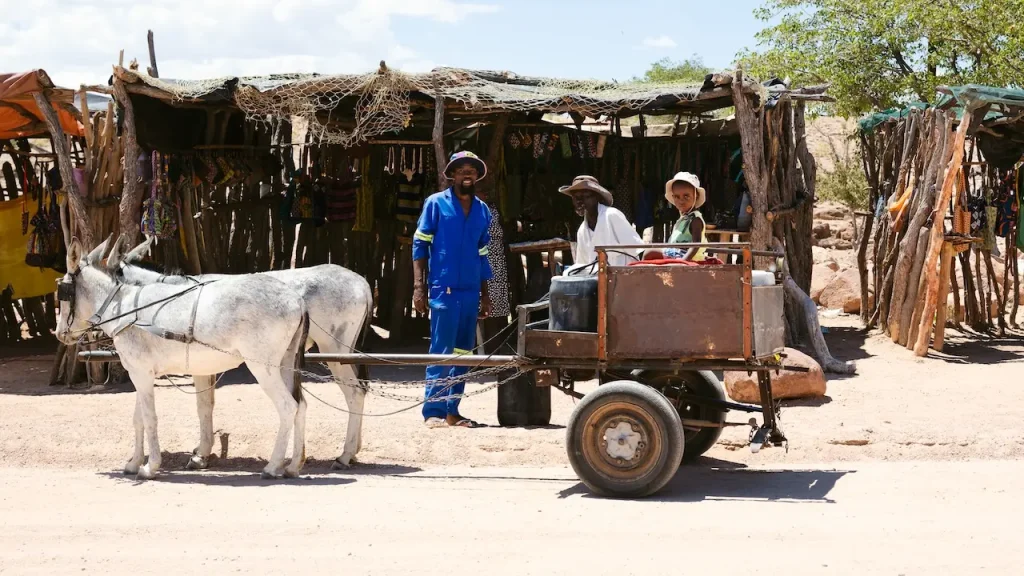
Every landscape has a human story running alongside its geological and ecological one, and in Damaraland that story belongs primarily to the Damara. They are among the oldest inhabitants of this region, a people whose presence here predates the written record and whose relationship with the desert environment has shaped their culture, language, and way of life into something entirely distinct from any other group in southern Africa.
Understanding who the Damara are, what their history includes, and how to engage with their culture respectfully makes a Damaraland trip not just more meaningful but more honest. Tourism in this region is built on Damara land, managed through Damara conservancies, and guided by Damara community members. Coming with knowledge of who you are meeting is a basic courtesy.
Who Are the Damara?
The Damara, also known as the Dama or !Nuu (the exclamation mark indicating a click consonant), are a Khoekhoegowab-speaking people with a long and complex history in north-western Namibia. Their origins are debated among historians and anthropologists: they speak a Khoisan click language closely related to that of the Nama people, yet their physical features and cultural practices suggest a different ethnic ancestry. One influential theory proposes that the Damara adopted the Khoekhoegowab language from the Nama through centuries of close contact, while retaining biological and cultural characteristics from a separate and possibly very ancient population.
What is certain is that the Damara occupied much of central and north-western Namibia before European contact, and that they were heavily impacted by successive waves of displacement: first by Nama and Herero expansion, then by German colonial administration, and finally by the apartheid-era South African administration that imposed the Damaraland homeland as a racially defined territory.
Today the Damara are one of Namibia’s larger ethnic groups, numbering approximately 100,000 people. Their heartland remains north-western Namibia, and the community conservancies of the region, particularly Torra, Doro !Nawas, and Uibasen, are managed by Damara community members who are the direct beneficiaries of the tourism income that flows through them.
Language
The Damara speak Khoekhoegowab, a language characterised by a series of click consonants that are represented in written form by symbols including !, /, //, and #. These are among the most phonetically complex sounds in any human language, and learning even a basic greeting in Khoekhoegowab is a gesture that is consistently appreciated by Damara hosts.
Basic greetings:
- Mâtisa (pronounced roughly MAH-tis-ah): Hello / How are you?
- Î (pronounced as in “ee” with a slight click before it): Yes
- Gangans (GHANG-ans): Thank you
The clicks are difficult to reproduce without practice, and Damara people are universally patient with attempts. The effort of trying is what communicates respect.
Traditional Culture and Way of Life
Economy and Livelihoods
Historically the Damara were primarily hunter-gatherers, using their intimate knowledge of the desert environment to identify water, track game, and harvest the !nara melon and other desert plants that sustained them through dry seasons. They also kept small numbers of goats and cattle. This semi-nomadic lifestyle required a detailed understanding of the landscape that is still evident in the encyclopedic environmental knowledge of older Damara community members.
Today most Damara live in permanent settlements, with livelihoods that combine subsistence farming and small-scale livestock herding with formal employment. Tourism has become an increasingly significant income source through the conservancy system, employment at lodges, and cultural tourism activities.
Craft Traditions
Damara craft traditions include leatherwork, beadwork, and the making of jewellery from ostrich eggshell and other natural materials. The craft markets at community sites across Damaraland, including the Petrified Forest and the Uibasen Conservancy near Twyfelfontein, are run by Damara women whose work reflects genuine traditional skills rather than mass-produced tourist goods. The crafts guide covers what to look for and how to assess authenticity.
Food
Traditional Damara food is shaped by the desert environment: the !nara melon (both flesh and seeds) is a historically important food source; various roots and bulbs are collected seasonally; and game meat, when available, is dried and preserved. Contemporary Damara food has incorporated maize meal, rice, and other staples, but traditional preparation methods and desert ingredients are preserved in community cultural presentations.
The Damara Living Museum
The most accessible and most curated cultural experience in the Damaraland region is the Damara Living Museum, located near Twyfelfontein within the Uibasen Conservancy. Community members demonstrate traditional practices including fire-making, traditional dress and jewellery, medicinal plant use, and traditional music and dance.
The Living Museum model is community-owned and operated: the fee paid by visitors goes directly to the participating community members. It is explicitly not a performance for outside entertainment but a community-controlled presentation of cultural practices that the Damara themselves have decided to share. This distinction matters to the people running it, and visitors who engage with genuine curiosity rather than passive spectatorship consistently report a more rewarding experience.
Practical notes: The Living Museum is open daily; allow 90 minutes for a full experience. Photography is permitted with consent; always ask before photographing individuals. The entry fee is payable in cash (Namibian dollars).
Engaging Respectfully as a Visitor
Ask before photographing. This is non-negotiable and applies everywhere in Damaraland, but is particularly important in community settings. A camera pointed at a person without permission is an act of taking, not receiving. The respectful approach is to make eye contact, gesture toward your camera, and wait for an affirmative response before shooting.
Purchase from community outlets. When craft purchases are available at community sites, buy from them rather than from resellers in town. The margin at a community craft market goes directly to the maker.
Engage with guides as professionals. Damara guides at Twyfelfontein, the Petrified Forest, and the Living Museum have detailed knowledge of their sites and their cultural significance. Treat their expertise with the same respect you would extend to a museum curator.
Learn something before you arrive. Reading this guide is a start. The San rock art guide and the community conservancy overview together provide the broader context for the Damaraland cultural landscape.
Do not conflate the Damara with the San. The San created the rock engravings at Twyfelfontein and the paintings at Brandberg. The Damara are the contemporary custodians of the landscape where these sites sit. They are distinct groups with different languages, histories, and cultural traditions. The Twyfelfontein guides, who are Damara, will explain this distinction clearly; it helps if visitors already understand it.
The responsible tourism guide covers the broader set of principles for visitor behaviour across the region.
NWR campsite bookings and vehicle hire through to NamibRand private lodge stays and guided dune photography programmes.