
Halali Waterhole: Etosha’s Quieter Alternative to Okaukuejo
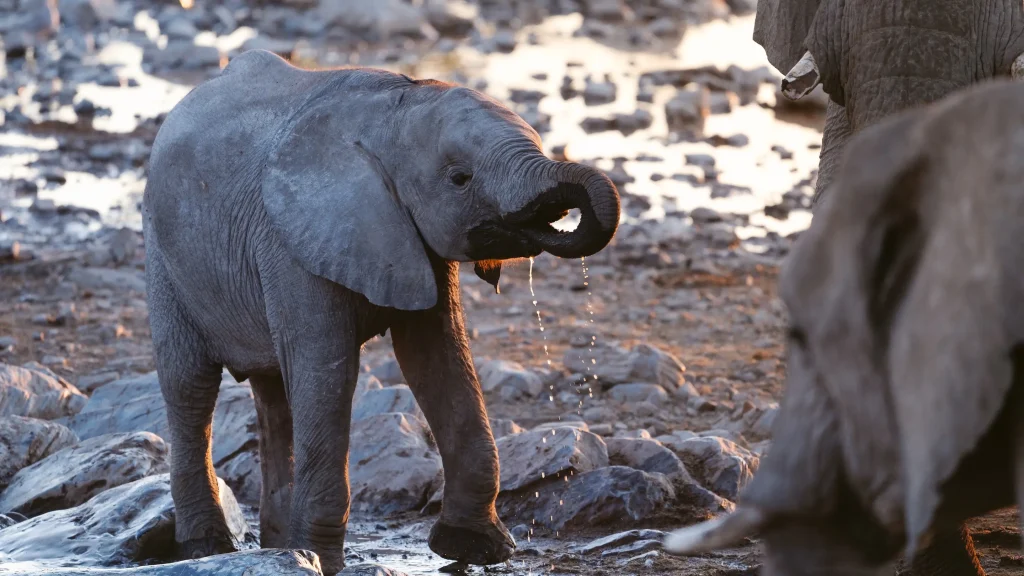
Experienced Etosha visitors know something that first-timers do not: the Halali waterhole is, on many nights, as productive as Okaukuejo and considerably less crowded. The central park location, the kopje setting, and the quieter camp atmosphere make Halali a genuinely compelling choice for visitors who want the floodlit waterhole experience without the peak-season crowds that Okaukuejo attracts.
This is not a compromise option. It is a different experience with specific advantages.
The Setting
Halali rest camp sits on a low dolerite kopje in the central section of the park, roughly equidistant between Okaukuejo and Namutoni. The rocky terrain of the kopje provides a distinctive setting and draws a slightly different range of species from the flatter bush around Okaukuejo: klipspringer occasionally appear on the surrounding rocks, and the sheltered drainage lines nearby hold good kudu habitat.
The floodlit waterhole is accessed from the camp via a path through the kopje, which provides a brief bush walk rather than a step through a camp gate. The viewing area is smaller than Okaukuejo’s enclosure: a shaded deck with seating for perhaps sixty to eighty visitors, positioned approximately 30 metres from the water. The smaller viewing area means the experience is more intimate; with fewer people present, the quiet is deeper and the concentration more intense.
The Species
Black Rhino
Black rhino visit Halali’s floodlit waterhole regularly, though with somewhat less frequency than Okaukuejo. The precise dynamics of why individual rhino favour particular waterholes are not fully understood, but the species composition of Halali’s nocturnal visitors is broadly similar to Okaukuejo’s. Arrival times follow the same general pattern: 21:00 to midnight is the most productive window.
Elephant
Elephant herds are, in many visitor accounts, more reliably present at Halali than at Okaukuejo. The central section’s higher elephant density and the availability of surrounding bush make Halali waterhole a regular stop for both breeding herds and large bulls. Elephant viewing from the Halali enclosure, at slightly closer effective range than Okaukuejo, is exceptional.
Lion
Lion sightings at Halali are recorded several times per season, typically associated with prey herds drinking at the waterhole. The central section’s high lion population makes this a plausible nocturnal encounter.
Spotted Hyena and Other Nocturnal Species
Spotted hyena are consistent Halali visitors, as at all three floodlit waterholes. Giraffe, zebra, and various smaller mammals complete the nocturnal species list.
Why Choose Halali Over Okaukuejo
Fewer crowds. Okaukuejo’s celebrity status fills its enclosure in peak season; Halali’s enclosure rarely fills completely. You are more likely to have a front-row position without arriving an hour early.
Central position. Halali’s central location allows circuits covering both western (Rietfontein, Goas, Salvadora) and eastern (Klein Namutoni, Kalkheuwel, Fischer’s Pan) waterholes within gate hours. Okaukuejo’s western position makes eastern circuits very long day trips.
Different atmosphere. The kopje setting, the path from camp, and the smaller enclosure make Halali feel more remote and more intimate than Okaukuejo, even though it is a managed rest camp.
Comparable rhino probability. For most nights, Halali’s black rhino probability is only marginally lower than Okaukuejo’s. The gap in probability does not justify choosing Okaukuejo if other factors favour Halali.
Combining Halali with a Wider Circuit
The central position makes Halali an excellent base for visitors who want to cover the full park within a multi-night programme. Two nights at Halali, one night each at Okaukuejo and Namutoni, allows access to the best waterholes of all three sections. The Etosha itineraries guide includes a three-night programme built around this approach.
For daytime circuits from Halali, the waterhole circuit guide covers the specific routes and distances. The Halali rest camp guide covers accommodation and facilities.
Contact Mat-Travel to book Halali accommodation as part of a planned Etosha circuit.
NWR campsite bookings and vehicle hire through to NamibRand private lodge stays and guided dune photography programmes.