
Spitzkoppe: Der vollständige Guide zu Namibias Matterhorn
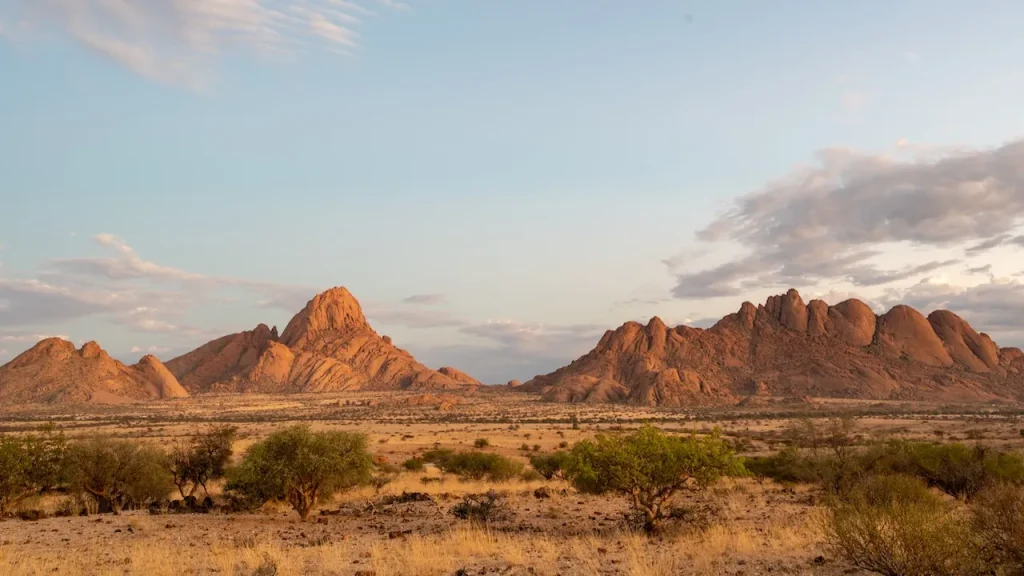
Der Vergleich mit dem Matterhorn ist nicht ganz fair gegenüber beiden Bergen, trifft aber einen wahren Kern: Die Spitzkoppe ist ein Berg mit Präsenz. Die präkambrischen Granitkuppeln, die bis zu 700 Meter aus den umliegenden Ebenen der südlichen Namib aufragen, besitzen eine architektonische Qualität, eine Schärfe der Silhouette und eine Kühnheit der Dimension, die sie von jeder anderen Landschaftsformation in Namibia abheben.
Sie sind zudem, anders als das Schweizer Original, zugänglich. Man kann zwischen den Felsblöcken an ihrem Fuß campen, zu Aussichtspunkten wandern, die über die Namib blicken, San-Felsmalereien in geschützten Überhängen entdecken und nachts auf einer warmen Granitplatte liegen und die Milchstraße in einem Himmel von außergewöhnlicher Dunkelheit über sich hinwegziehen sehen. Spitzkoppe ist ein eigenständiges Reiseziel und kein bloßer geologischer Zwischenpunkt auf dem Weg zu etwas anderem.
Die Geologie
Spitzkoppe ist ein Inselberg: ein isolierter Felsberg, der sich abrupt aus einer umgebenden Ebene deutlich geringerer Höhe erhebt. Der Granit, aus dem er besteht, ist etwa 120 Millionen Jahre alt und als geschmolzenes Gestein in ältere umliegende Formationen intrudiert worden, während derselben Phase vulkanischer Aktivität, die auch den Brandberg und andere Granitmassive der Region hervorgebracht hat.
Die charakteristische Form der Gipfel spiegelt die Struktur der ursprünglichen Granitintrusion sowie das Muster der darin vorhandenen Klüfte wider. Granit bricht in typischen geometrischen Mustern, und die anschließende Verwitterung und Erosion folgten diesen Klüften und formten so die runden Kuppeln, vertikalen Wände und isolierten Felstürme, die der Spitzkoppe ihren Charakter verleihen. Die glatt gerundeten Oberflächen der größeren Felsblöcke am Fuß sind das Ergebnis eines Prozesses namens Exfoliation, bei dem sich dünne Gesteinsschichten ablösen, wenn Temperaturwechsel zu Ausdehnung und Kontraktion führen.
Der Spitzkoppe-Komplex umfasst den Hauptgipfel (1.728 Meter über dem Meeresspiegel) sowie die kleineren Groot Spitzkoppe und Klein Spitzkoppe im Südwesten, die zusammen eine Gruppe von Granitformationen bilden und eine außergewöhnliche Landschaft über eine Fläche von etwa 20 Quadratkilometern schaffen.
DIe Felsenkunst
San-Felsmalereien finden sich in mehreren geschützten Überhängen und Höhlen im Felsfeld der Spitzkoppe. Im Gegensatz zu den Gravuren in Twyfelfontein, die in Sandstein eingearbeitet wurden, sind die Malereien in der Spitzkoppe mit roten und weißen Mineralpigmenten auf die Felsoberfläche aufgetragen. Sie stammen vermutlich aus einem ähnlichen Zeitraum (mehrere hundert bis mehrere tausend Jahre) und stehen in Verbindung mit derselben schamanistischen Tradition, die im Leitfaden zur San-Felskunst beschrieben wird.
Die am leichtesten zugängliche Malereistelle befindet sich in gut erreichbarer Gehweite vom Campingbereich. Die lokalen Community-Guides in der Spitzkoppe können Sie zu weiteren Standorten führen; einige erfordern einen längeren Fußmarsch und lohnen sich aufgrund der zusätzlichen Abgeschiedenheit und der Qualität der Darstellungen.
Camping bei Spitzkoppe
Das Campen in der Spitzkoppe gehört zu den unvergesslichsten Campingerlebnissen in Namibia. Die einzelnen Stellplätze liegen zwischen und innerhalb riesiger Granitfelsen und verfügen jeweils über eigene natürliche Schutzwände und Ausblicke. Kein Platz gleicht dem anderen: Einige sind offen mit weitem Blick über die Ebenen, andere liegen in einer felsigen Nische, wieder andere befinden sich unter überhängenden Felswänden, die eine höhlenartige Atmosphäre schaffen.
Die Einrichtungen sind einfach: einfache Sanitäranlagen (Trocken-/Plumpsklos und kalte Eimerduschen an den meisten Stellplätzen), Braai-Roste und kein Stromanschluss. Das Community-Personal kassiert täglich die geringe Campinggebühr und kann beim Feuerholz behilflich sein.
Das Erlebnis, in der Spitzkoppe aufzuwachen, wenn das erste Licht die höchsten Punkte der Granitkuppeln berührt und die Ebenen darunter allmählich aus der Dunkelheit auftauchen, macht jede Einfachheit der Einrichtungen mehr als wett.
Eine kleine Eintritts- und Campinggebühr ist an den Spitzkoppe Community Trust zu entrichten. Diese Gebühr unterstützt die Gemeindemitglieder, die den Ort verwalten und instand halten. Vollständige Details und aktuelle Tarife finden Sie im Leitfaden zu Campingplätzen in Damaraland.
Wandern
Mehrere Wanderwege durchziehen das Felsfeld der Spitzkoppe, von kurzen Spaziergängen von etwa 30 Minuten bis hin zu Halbtagesrouten, die zu erhöhten Aussichtspunkten führen. Keine der Routen erfordert technische Kletterausrüstung, jedoch sind alle mit dem Überqueren von rauem Granit und etwas Orientierungssinn verbunden.
Der Bogen: Der beliebteste kurze Wanderweg führt zu einem natürlichen Granitbogen, der durch Exfoliation entstanden ist. Der Weg dauert etwa 45 Minuten hin und zurück und bietet gute Ausblicke über die südlichen Ebenen.
Pontok-Bergrunde: Eine längere Halbtagesroute, die die Pontok-Satellitengipfel südlich des Hauptmassivs der Spitzkoppe umrundet und durch abwechslungsreiches Felsgelände mit mehreren Aussichtspunkten führt.
Gipfelanstieg: Der Hauptgipfel der Spitzkoppe ist ohne technische Kletterausrüstung nicht zugänglich. Dennoch bieten höher gelegene Aussichtspunkte, die für erfahrene Wanderer durch einfaches Klettern erreichbar sind, lohnende Ausblicke über den gesamten Spitzkoppe-Komplex und die umliegenden Ebenen der Namib.
Alle Wanderungen in der Spitzkoppe erfolgen unguided, mit Ausnahme der Felskunst-Stellen. Nehmen Sie ausreichend Wasser mit (mindestens 2 Liter pro Person für eine Halbtageswanderung), tragen Sie geschlossene Schuhe mit gutem Profil und informieren Sie das Community-Personal vor dem Aufbruch über Ihre geplante Route.
Astrophotographie
Die Spitzkoppe gehört zu den fünf besten Astrofotografie-Standorten in Afrika. Die Kombination aus geringer Lichtverschmutzung (die nächste Stadt mit nennenswerter Beleuchtung liegt über 60 Kilometer entfernt), großer Höhe, niedriger Luftfeuchtigkeit in der Trockenzeit und den außergewöhnlichen Granitformationen als Vordergrund macht den Ort einzigartig für Nachtaufnahmen des Himmels.
Die Granitfelsen unmittelbar rund um den Campingbereich bieten Vordergründe im Nahbereich, die weitwinklige Kompositionen aus dramatischen Felsformen und der Milchstraße ermöglichen. Der Bogen ist, aus einer Position fotografiert, die den Himmel durch die Öffnung einrahmt, eine besonders bekannte und geschätzte Komposition.
Optimate Voraussetzungen
- Neumondphasen in der Trockenzeit (Juni bis August) bieten die dunkelsten Himmel und die stabilsten atmosphärischen Bedingungen.
- Planen Sie, einen Tag früher anzureisen, um das Felsgelände bei Tageslicht kennenzulernen, bevor Sie es nach Einbruch der Dunkelheit nutzen.
- Der Kern der Milchstraße steht von Juni bis August etwa ab 21:00 Uhr über dem Horizont und verlagert sich im Verlauf der Saison auf spätere Uhrzeiten.
- Ein Weitwinkelobjektiv von 14 bis 24 mm mit einer maximalen Blendenöffnung von f/2.8 oder größer ist das Minimum für eine effektive Aufnahme der Milchstraße. ISO 3200 bis 6400 ist üblich.
Der Astrofotografie-Leitfaden behandelt all dies in detaillierter technischer Ausführung.
Anreise
Die Spitzkoppe liegt 106 Kilometer nördlich von Swakopmund und 195 Kilometer südlich von Khorixas an der südlichen Grenze des Damaralandes. Die Abzweigung von der B2 (Straße Swakopmund–Usakos) ist gut ausgeschildert, und die Straße zum Campingbereich ist eine gut befahrbare Schotterpiste, die auch mit Zweiradantrieb passierbar ist.
Diese gute Erreichbarkeit macht die Spitzkoppe zu einem einfachen Tagesausflug von Swakopmund für Besucher der Küste, doch die Astrofotografie und frühe Wandererlebnisse, die den Ort so außergewöhnlich machen, erfordern eine Übernachtung.
Spitzkoppe mit einer Damaraland-Reiseroute kombinieren
Die Spitzkoppe liegt am südlichen Ein- oder Ausgang der meisten Damaraland-Routen und eignet sich daher entweder als erste Übernachtung vor der Weiterfahrt nach Norden oder als letzte Nacht vor der Rückfahrt nach Süden Richtung Swakopmund oder Windhoek. Der Damaraland-Selbstfahrerleitfaden beschreibt die Routenoptionen im Detail. Die 7-Tage-Damaraland-Reiseroute nutzt die Spitzkoppe als südlichen Ankerpunkt.
NWR-Campingplatzreservierungen und Fahrzeugvermietung bis hin zu Aufenthalten in privaten Lodges im NamibRand sowie geführten Dünen-Fotografieprogrammen.