
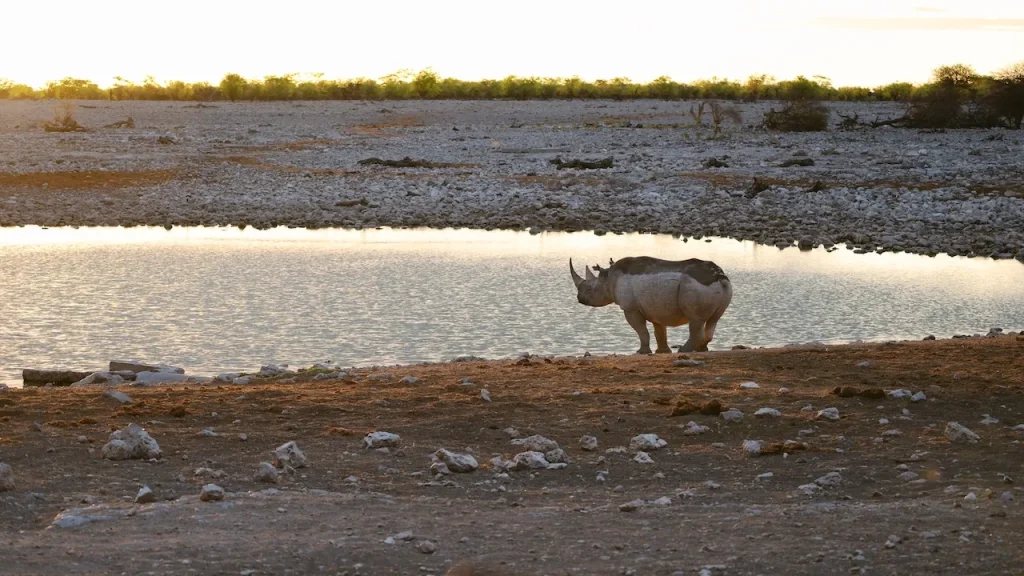
Etosha holds both black rhino and white rhino, which makes it unique among most African parks. The two species use different habitats within the park, visit different waterholes, and behave differently when encountered. Finding one requires different strategy from finding the other, and the experiences are different enough to both merit dedicated planning.
Black Rhino Waterholes
Inhalt
Black rhino in Etosha are predominantly nocturnal, solitary browsers that use the western and central sections of the park. Their waterhole visits happen primarily after dark, which makes the floodlit waterhole system the primary mechanism for visitor encounters.
Okaukuejo Floodlit Waterhole. The Primary Destination
Confidence rating for black rhino: Hoch
Okaukuejo is the correct answer for most visitors whose primary Etosha wildlife objective is black rhino. The frequency of individual visits (most nights, year-round), the quality of the viewing infrastructure (fixed enclosure, consistent lighting, front-row proximity), and the decades of habituation that specific individuals have to the viewing area combine to make this the most reliable black rhino encounter available anywhere in Africa.
Timing: 21:00 to 02:00, with the 21:00 to midnight window producing the highest frequency of arrivals. Some individuals arrive earlier; some only after midnight. Plan for a two to three hour vigil.
Tactics: Front-row seating acquired before 20:30 in peak season. Full cold-weather preparation. No flash photography. Screen brightness minimised. See the complete Okaukuejo waterhole guide.
Halali Floodlit Waterhole
Confidence rating for black rhino: Mittel
Halali produces black rhino on a meaningful proportion of nights, particularly in the dry season. The frequency is lower than Okaukuejo, but the smaller enclosure means a rhino encounter at Halali is more intimate than the more crowded Okaukuejo experience. For visitors spending multiple nights at a single camp who are based at Halali, this is worth committing to seriously.
Timing: Same window as Okaukuejo; 21:00 to midnight most productive.
See the Halali waterhole guide.
Daytime Black Rhino Encounters
Daytime encounters with black rhino are genuinely uncommon from the self-drive circuits. Black rhino rest in cover during the day and their nocturnal habits mean vehicle-based daytime sightings are infrequent. Visitors who specifically want a daytime black rhino encounter should consider Ongava Game Reserve on the southern park boundary, where guided activities include tracking black rhino on foot on the reserve’s private land.
White Rhino Waterholes
White rhino are grazers rather than browsers, more social than black rhino, and active during daylight hours. They are concentrated in the western section of the park, particularly around Dolomite Camp and the Galton Gate approach.
Western Etosha Circuit (Dolomite Camp Area)
Confidence rating for white rhino: Medium to High (in western section)
White rhino in western Etosha are daytime-active and found in open grassland habitat. Circuit drives from Dolomite Camp through the western section regularly produce sightings of small groups of white rhino grazing in open grass.
Timing: Morning (07:00 to 10:00) and late afternoon (16:00 to 18:00).
See the western Etosha guide.
Ongava Game Reserve
For the most reliable white rhino encounter, including a walking approach, Ongava Game Reserve on the southern park boundary is the optimal choice. The reserve holds both black and white rhino on private land, and guided walks bring you to within close range of white rhino in open grassland.
Distinguishing the Two Species
In the field, black and white rhino are reliably distinguished by:
Lip shape: The most reliable indicator at close range. White rhino: wide, square, flat upper lip adapted for grazing. Black rhino: narrow, hooked, pointed upper lip adapted for browsing.
Head carriage: White rhino hold the head low (grazing posture). Black rhino hold the head higher, more upright.
Social group: Black rhino are almost always solitary. White rhino are often in groups of two to four.
Time of day: A rhino at the floodlit waterhole at midnight is almost certainly a black rhino. A rhino in open grassland at 08:00 in the western section is most likely a white rhino.
Size: White rhino are larger than black rhino on average, but individual variation makes this unreliable in the field without direct comparison.
Die wildlife by waterhole matrix maps both species against the full waterhole network.