
Kraftstoff, Essen und Wasser: Die Lücken zwischen Damaralands Orten überbrücken
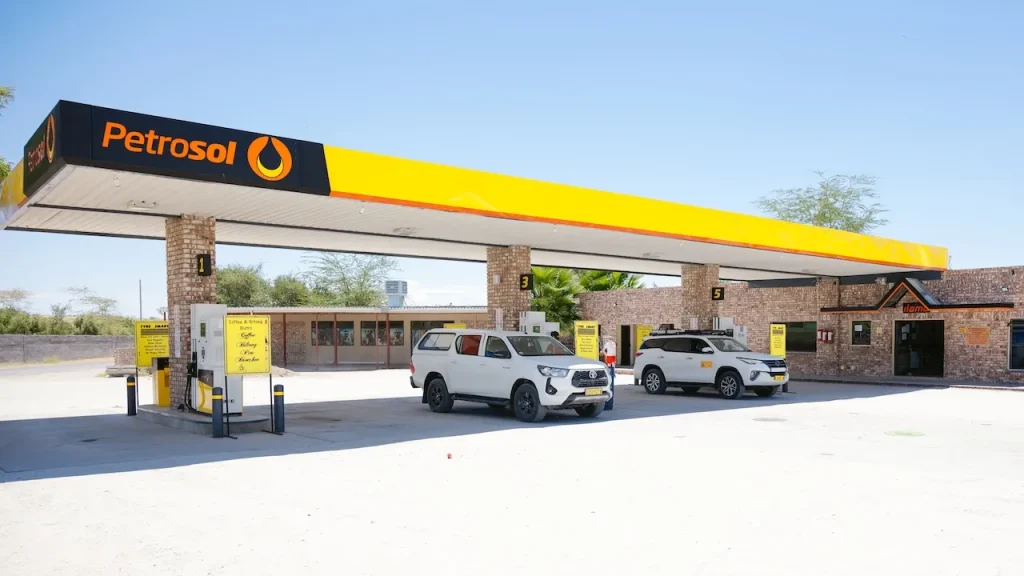
Der häufigste Fehler von Damaraland-Selbstfahrern ist es, die Entfernungen zwischen zuverlässigen Versorgungsstellen zu unterschätzen. Auf der Karte wirkt die Strecke zwischen Kamanjab und Palmwag gut machbar. In der Realität handelt es sich jedoch um etwa 200 km Schotterstraße ohne bestätigte Tankmöglichkeit dazwischen. Wenn Sie Palmwag Lodge mit nahezu leerem Tank erreichen, kann es zudem vorkommen, dass der Dieselvorrat der Lodge vorübergehend erschöpft ist. Der Selbstfahrer-Guide behandelt die Fahrzeugvorbereitung; dieser Guide behandelt die Logistik, um es am Laufen zu halten.
Tankstellen: Die vollständige Übersicht
Reliable Fuel Stations
| Standort | Tankart | Notiz |
|---|---|---|
| Outjo | Benzin, diesel | Mehrere Tankstellen; 24-Stunden-Option verfügbar; letzte vollständig zuverlässige Versorgungsstation vor der C35 |
| Otjiwarongo | Benzin, diesel | An der B1 gelegen; größere Stadt mit mehreren Tankstellen |
| Kamanjab | Benzin, diesel | Kleiner Ort an der C35; zuverlässig, aber nur eine Tankstelle; Öffnungszeiten bestätigen |
| Khorixas | Benzin, diesel | Zwei Tankstellen; relativ zuverlässig; vor jeder westwärts führenden Route hier tanken |
| Uis | Benzin, diesel | Kleine Tankstelle an der Hauptstraße; Verfügbarkeit bei Ankunft bestätigen |
| Palmwag Lodge | Diesel (hauptsächlich), etwas Benzin | Nicht garantiert; vorher anrufen; begrenzte Mengen; nur für Notfälle geeignet |
| Swakopmund | Benzin, diesel | Mehrere Tankstellen; vollständig zuverlässig; südlicher Ein- bzw. Ausgangspunkt |
| Henties Bay | Benzin, diesel | Küstenort; zuverlässig; sinnvoll für Routen von der Küste zum Krater |
Unzuverlässige oder nicht vorhandene Tankstellen
- Zwischen Kamanjab und Palmwag (C35): Keine zuverlässige Tankmöglichkeit. 200-km-Lücke. Mindestens mit vollem Tank plus einem 20-Liter-Reservekanister fahren.
- Westlich von Palmwag: Keine Tankmöglichkeiten hinter der Palmwag Lodge. Jede Route in die Palmwag-Konzession, zum Messum-Krater oder entlang der Zufahrt zur Skeleton Coast erfordert vollständige Eigenversorgung.
- Ugab-Gebiet und Schlucht: Keine Tankmöglichkeiten. Planung ab Khorixas oder Kamanjab erforderlich.
- Etendeka-Plateau: Keine Tankmöglichkeiten. Planung ab Palmwag oder Fahrzeugbetankung über das Camp organisieren.
Planung Ihrer Tankabschnitte
The essential discipline is calculating your vehicle’s range and planning accordingly. The formula:
Reichweite (km) = Tankkapazität (Liter) × Kraftstoffverbrauch (Liter pro 100 km)
Für einen Standard-Land Cruiser der 79er-Serie mit 130-Liter-Doppeltank und einem Verbrauch von etwa 14 Litern pro 100 km auf Schotterstraßen gilt: Reichweite = 130 ÷ 14 × 100 = ungefähr 930 km
In der Praxis sollte eine Sicherheitsreserve von 20 % für unerwartete Umwege, schwieriges Gelände und den erhöhten Kraftstoffverbrauch schwer beladener Fahrzeuge auf Wellblechpisten einkalkuliert werden: Praktische Reichweite = 930 × 0,8 = ungefähr 740 km
Für ein Fahrzeug mit Einzeltank von 80 Litern bei 14 L/100 km: Praktische Reichweite (mit 20 % Sicherheitsmarge) = ungefähr 460 km
Ein 20-Liter-Reservekanister erhöht die Reichweite bei diesem Verbrauch um etwa 145 km. Auf jeder Strecke, bei der die Distanz zwischen bestätigten Tankstellen Ihre praktische Reichweite übersteigt, sollte der Reservekanister mitgeführt werden.
Essen: Versorgungsstationen
Vollständiger Zugang zu Supermärkten
- Outjo: Ein kleiner Supermarkt und mehrere Gemischtwarenläden. Hier vollständig für die Einfahrt nach Damaraland vorräten.
- Kamanjab: Ein Gemischtwarenladen mit Grundversorgung; begrenztes frisches Angebot.
- Khorixas: Ein kleiner Supermarkt (Woermann Brock oder ähnlich). Ausreichend für die Grundversorgung.
- Uis: Ein kleiner Gemischtwarenladen. Sehr begrenztes Sortiment.
- Swakopmund: Vollständige Auswahl an Supermärkten, einschließlich Spar. Der beste Versorgungsort bei Anreise von der Küste.
Lodge Restaurants
Die meisten Lodges in Damaraland bieten Nicht-Gästen nach vorheriger Anfrage eine Mahlzeit im Restaurant an. Dies ist praktisch, um an einem sonst selbstversorgten Tag eine warme Mahlzeit einzuplanen. Kontaktieren Sie die Lodge vor der Ankunft, um Verfügbarkeit und Kosten zu bestätigen.
Checkliste für Selbstversorger-Vorräte
Für eine 7-tägige Selbstfahrertour sollten Sie vor der Abfahrt aus Outjo oder Swakopmund folgende Vorräte einplanen:
- Haltbare Grundnahrungsmittel: Dosenfisch, Hülsenfrüchte in Dosen, Dosentomaten, Pasta, Reis, Couscous
- Instantkaffee, Tee, Zucker, Milchpulver
- Getrocknete Früchte und Nüsse als Snacks für unterwegs
- Cracker und Erdnussbutter
- Frische Lebensmittel für die ersten 2 bis 3 Tage: Brot, Käse, Gemüse, Obst
- Eier (robust in einer Hartkühlbox; vielseitig für das Kochen im Camp)
- Würzmittel: Öl, Salz, Pfeffer, Sojasauce
Wasser: Nicht verhandelbar
Wasser ist für das Überleben wichtiger als Kraftstoff. Ein Fahrzeug, dem der Treibstoff ausgeht, kann zurückgelassen werden; schwere Dehydrierung unter Wüstenbedingungen kann nicht einfach kompensiert werden.
Safe Water Sources
- Leitungswasser in Lodges: Trinkbar in allen etablierten Lodges. Bei Unsicherheit nachfragen.
- Leitungswasser in Städten (Outjo, Khorixas, Kamanjab, Uis): In der Regel trinkbar; nach eigenem Ermessen verwenden und filtern bzw. aufbereiten, wenn die Versorgung beeinträchtigt erscheint.
- Borehole-Wasser auf Gemeinschaftscampsites: unterschiedliche Qualität; vor dem Trinken mit Wasserreinigungstabletten behandeln.
- Flussbetten: Trinken Sie kein Wasser aus Flussbetten ohne gründliche Aufbereitung. Selbst eine chemisch behandelte Wasserstelle in einem namibischen Flussbett kann Parasiten enthalten.
Was mitgeführt werden sollte
- Im Fahrzeug jederzeit mitführen: Mindestens 10 Liter pro Person für westliche Routen; 5 Liter pro Person für zentrale östliche Routen
- Faltbarer 10- bis 20-Liter-Behälter: Ermöglicht das Nachfüllen an Lodge- oder Stadttaps und das Mitführen einer Reserve.
- Wasserreinigungstabletten: Für den Notfall bei unsicheren Wasserquellen.
- Wasserfilter: Ein Sawyer Squeeze oder vergleichbares Modell; leicht und effektiv für längere Reisen in abgelegene Gebiete.
Richtlinie zur Rationierung
In Damaraland’s heat, minimum water consumption for an adult at rest is 2 litres per day. During active walking or tracking (White Lady hike, rhino tracking, Ugab Gorge), this increases to 4 to 5 litres per day. Build your carrying plan around these figures plus a 50% safety margin.
Notfallplanung
Selbst sorgfältige Planung kann auf Unerwartetes treffen: eine defekte Kraftstoffpumpe, eine längere technische Verzögerung, eine unerwartete Umleitung. Die Notfallprotokolle für abgelegenes Damaraland:
Beim Fahrzeug bleiben. Ein Fahrzeug ist aus der Luft deutlich leichter zu orten als eine zu Fuß gehende Person. Wenn kein bestätigter Weg zu Wasser innerhalb von ein bis zwei Kilometern vorhanden ist, bleiben Sie beim Fahrzeug
Nutzen Sie Ihr Satellitenkommunikationsgerät. Ein Garmin inReach SOS-Signal erreicht das GEOS International Emergency Response Coordination Centre, das die Koordination mit lokalen Rettungsdiensten übernimmt. NARAS (+264 61 230505) und MedRescue (+264 61 300600) bieten Luftrettungsdienste in Namibia an.
Signal für vorbeifahrenden Verkehr. Auf der C35 ist der Verkehr unregelmäßig, aber es gibt Durchfahrten. Ein flach auf der Straße liegender Reifen (nicht aufgestellt, da er bei hoher Geschwindigkeit möglicherweise nicht gesehen wird) ist ein übliches Notsignal.
Wasser nicht zu stark rationieren in der Hitze. Starke Dehydrierung beeinträchtigt die Urteilsfähigkeit schneller als die körperliche Leistungsfähigkeit. Trinken Sie regelmäßig, auch wenn die Gesamtmenge begrenzt ist.
Der Sicherheitsleitfaden deckt den vollständigen Rahmen der Notfallvorbereitung ab.
NWR-Campingplatzreservierungen und Fahrzeugvermietung bis hin zu Aufenthalten in privaten Lodges im NamibRand sowie geführten Dünen-Fotografieprogrammen.